

Evaluating the structural efficiency of your trading account requires looking much deeper than the flashing numbers on your daily market monitor. Most retail participants focus entirely on securing tight entry quotes, believing the flashing gap on their chart represents the absolute totality of their transaction fees. Real capital leakage typically happens in the background, where unoptimized secondary fees can quietly act like a slow leak in your compounding engine.
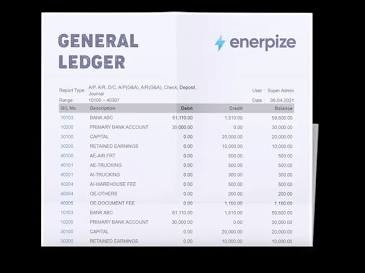
Auditing your platform’s backend transaction data log for hidden friction points. Source: Enerpize
Why do some positions incur a separate charge when held past the daily close?
The global foreign exchange network operates on a continuous, rolling settlement schedule where spot trades are technically supposed to settle within forty-eight business hours. To prevent retail traders from dealing with the logistics of physical currency delivery, trading software automatically rolls open positions over into the next active calendar day at 5:00 PM Eastern Standard Time.
This automatic rollover process triggers a dynamic funding adjustment known as an overnight swap point or financing rate. Every national currency carries an independent benchmark interest rate determined by its central bank. When you hold an asset across the daily cutoff, your balance sheet must absorb or collect the net yield difference between those two national currencies. Think of this mechanism exactly like an interest premium on a short-term line of credit; it is a structural holding cost that changes based on global monetary policies.
What is the mechanical catch behind holding trades on a Wednesday evening?
This particular background detail catches almost every single intermediate swing trader off guard. The global banking framework shuts down completely over the weekend, which means institutional settlement desks cannot physically clear transactions on Saturdays or Sundays.
To account for these dark weekend hours without halting active charting systems, broker networks apply a mandatory three-day swap adjustment in a single block every single Wednesday at 5:00 PM Eastern Standard Time. Holding any open trades past this specific weekday threshold means your account balance immediately absorbs three times the standard daily interest debit or credit. Forcing a heavy entry right before that midnight rollover boundary can deal an unexpected mathematical blow to your available margin limits, turning an otherwise profitable setup into an expensive technical error.
How do deposit and withdrawal fees alter my net portfolio performance?
Many retail participants spend weeks tracking micro-pips on their terminals, yet they completely overlook the transactional friction that occurs when moving fiat money in and out of their wallets. Intermediaries use highly fragmented payment paths, including international bank wires, credit cards, and digital funding networks.
Each payment channel carries unique, underlying processing expenses. A hidden markup or currency conversion fee applied during funding can instantly strip away two to three percent of your seed capital before you even place a market entry. To keep your foundational funding costs entirely transparent, utilizing advanced features from reputable, low-overhead providers like low spread forex brokers ensures your starting capital hits the server without being chewed up by intermediate handling premiums.
What is an inactivity fee and how do I avoid triggering it?
An inactivity fee is an administrative penalty that a platform deducts from your remaining equity when your account enters a prolonged period of operational stagnation. Brokers must maintain dedicated server allocations, compliance protocols, and data feeds for every single open profile on their networks, which generates real maintenance overhead.
If your workspace logs zero active order tickets or modifications over a consecutive window—typically ranging from ninety days to half a year—the system will automatically initiate a recurring monthly maintenance charge. This deduction will continue until you execute a fresh market position or your remaining balance hits absolute zero. You can easily sidestep this unnecessary capital drain by reading the firm’s fine print, archiving dormant profiles, or executing a minor micro-lot position once a quarter to keep your data line marked active.
Why do execution tools and data feeds sometimes carry an extra premium?
The quality of your charting interface relies heavily on the underlying technical infrastructure supplying your live platform feed. While standard retail accounts bundle basic quote streams for free, accessing specialized, raw institutional indicators or Level 2 Depth of Market statistics often requires extra software subscriptions.
Furthermore, running high-frequency automated scripts on a standard home connection introduces high latency and hardware risks. Serious traders often rent an external Virtual Private Server co-located right next to primary global banking arrays to secure lightning-fast execution speeds. Deploying your trading system through an enterprise-grade ecosystem, such as the best forex broker for mt5, minimizes these secondary software bills by offering advanced structural processing tools right inside the interface without tacked-on infrastructure fees.
How do I calculate my true, all-inclusive transactional cost matrix?
To find your genuine bottom-line cost drag, you must look past simple chart lines and construct an all-inclusive mathematical equation. Your calculation must combine three distinct operational metrics: the visual execution spread, unbundled ticket commissions, and accumulated overnight swap charges.
True Transaction Cost=Spread Expense+Round-Turn Commission+Net Financing Swaps
Convert every background expense into a precise pip equivalent, and add that total to your baseline entry spread. If the math reveals that your combined transaction costs are consuming more than ten percent of your average profit-target boundaries, your platform framework is working against your capital efficiency. Shifting your execution strictly to high-liquidity session windows allows competitive institutional volume to compress these friction points to natural floors.
Practical Action Plan
Stop evaluating your trading platform based on superficial marketing slogans or loud website graphics. Open your desktop terminal today, pull up your performance statement history from the past ninety days, and export the raw ledger logs into a clean spreadsheet workspace. Manually sum up every dollar lost to overnight financing rollovers, conversion markups, and subscription charges to find the exact structural weight pulling on your compounding engine. By identifying your account’s hidden financial leaks, and adapting your holding times to minimize high-drag settlement zones, you can naturally insulate your hard-earned margin and trade with true mathematical clarity.