
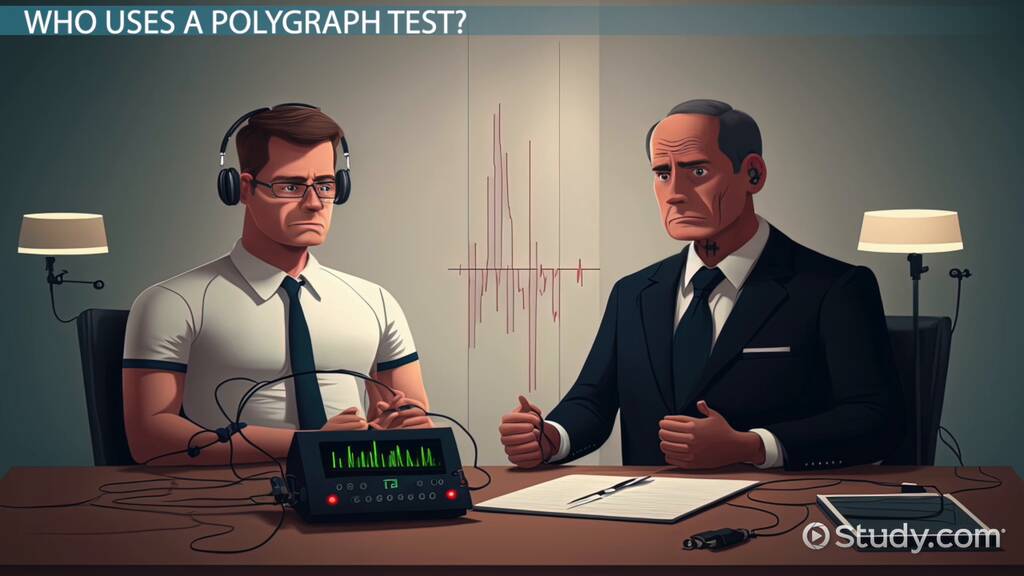
A polygraph test is usually requested when words alone are no longer enough. This happens in workplaces, private disputes, security checks, and cases where trust has already been damaged. People turn to the method not because it offers perfect certainty, but because they want an additional source of information when the stakes are high. In some online discussions, users move from serious screening topics to unrelated searches such as chicken road 2 betting game, which is a reminder that finding information is easy, while judging whether a method is appropriate for a real-life decision is much harder.
The key question is not simply whether a polygraph can be used, but whether it is worth using in a given situation. A polygraph is not a universal solution. It does not replace evidence, interviews, or fact-checking. Its value depends on the purpose of the examination, the context in which it is requested, and the way the result will be interpreted. In some cases, it can help narrow uncertainty. In others, it adds little and may even create false confidence.
What a Polygraph Test Is Actually For
A polygraph test is designed to record physiological responses during questioning. The underlying idea is that certain questions may trigger measurable changes in breathing, pulse, and skin response. The examiner then analyzes those changes in relation to the questions asked.
This means the method is not a direct detector of lies. It is an interpretive tool. That distinction matters because many people approach the polygraph with unrealistic expectations. They treat it as if it can settle disputes in a final way. In practice, it works better as a supporting instrument in situations where there is already a defined issue that needs clarification.
Because of that, the test is most useful when the question is narrow. It works better when the examination is built around a specific event, action, or fact pattern. It is weaker when people try to use it to answer broad questions such as whether someone is “a good person,” “fully honest,” or “generally reliable.”
Employment Screening in High-Risk Roles
One of the main reasons for applying for a polygraph test is employment screening in positions with elevated risk. These are usually roles involving access to money, confidential information, controlled assets, security-sensitive systems, or other resources where internal misconduct could create serious damage.
In this context, employers may consider a polygraph worthwhile if the role includes a strong trust component and if the legal framework allows such screening. The purpose is not to replace interviews or background checks. The purpose is to add another layer of review where the cost of a hidden risk is unusually high.
Even here, the decision should be selective. A polygraph is more defensible when the position is tied to concrete security concerns. It is less convincing when applied broadly to routine hiring. For most standard roles, a structured interview, reference check, and skills assessment provide more useful information than a polygraph.
Internal Workplace Investigations
A second major reason for applying is an internal investigation after a workplace incident. Examples may include theft, information leaks, fraud, or access abuse. In these cases, management may use the polygraph to clarify competing statements when direct evidence is limited.
This is one of the more practical applications because the issue can often be narrowed to a specific event. The test can be constructed around concrete questions tied to time, action, or knowledge. That structure gives the examination more focus than broad pre-employment screening.
Still, its value depends on how it is used. A polygraph should not become the sole basis for disciplinary action. It can support an investigation, suggest where more fact-finding is needed, or help assess contradictions, but it does not remove the need for records, witness interviews, and documented evidence.
Private Disputes and Relationship Conflicts
Private disputes are another common reason people seek a polygraph test. These cases may involve accusations of infidelity, financial dishonesty, hidden debts, or disputes within a family or between business partners. The underlying issue is usually the same: one side believes that direct conversation has failed.
In such situations, a polygraph may be worth considering only if both sides understand its limits. The test may help move a stalled conflict forward, but it can also deepen tension if one person expects it to provide an unquestionable answer. Emotional disputes often contain more than one problem. Even if the examination addresses one disputed fact, it does not resolve the larger breakdown of trust.
That is why the test is most useful in private matters when the disagreement is focused on a specific claim and when both parties agree in advance on how the result will be treated. Without that clarity, the examination may create more argument rather than less.
Security and Access-Related Concerns
Polygraph testing is also used when access itself creates risk. This may apply in environments where people handle confidential files, sensitive facilities, protected systems, or strategically important information. The reason for applying is preventive rather than reactive. The employer or institution wants to reduce exposure before a breach occurs.
This use case is based on risk management rather than accusation. The question is not always whether someone has already done something wrong. It may be whether the organization can justify higher scrutiny because the consequences of misuse would be severe.
Here again, the test only makes sense if the role-specific risk is real and clearly defined. Otherwise, the process can become excessive. A control measure should match the actual level of exposure, not serve as a general symbol of mistrust.
Legal and Dispute-Related Contexts
Some people apply for a polygraph test because they want support in a legal or quasi-legal dispute. They may hope the result will strengthen their position, persuade the other side to negotiate, or demonstrate willingness to submit to scrutiny.
This can be worth considering in a strategic sense, but only with caution. The usefulness of the result depends on the rules of the specific forum, the purpose of the examination, and how much weight outside decision-makers are willing to give it. In many cases, the test may have more influence as a negotiation tool than as formal proof.
That does not make it worthless, but it does mean that expectations should stay controlled. A person should know in advance whether the result is likely to affect anything practical or whether it will simply satisfy a personal desire to “prove” honesty.
When It Is Probably Not Worth Taking
A polygraph is usually not worth taking when the issue is vague, emotional, or poorly defined. It is also not worth taking when the result will be treated as a substitute for real investigation. If there is no clear question, no clear purpose, and no clear plan for using the result, the test adds little value.
It may also be unwise when one side is clearly seeking pressure rather than clarification. In those cases, the examination can become part of coercion rather than fact-finding. That weakens both the ethics and the practical value of the process.
Conclusion
It is worth taking a polygraph test when there is a specific question, a meaningful reason to ask it, and a realistic understanding of what the result can and cannot do. The main reasons for applying usually fall into several categories: high-risk employment screening, internal investigations, private disputes, security-related checks, and strategic use in legal conflicts.
The method is most useful when it supports a broader review rather than replaces it. A polygraph can help reduce uncertainty, but it cannot create certainty on its own. That is why the right reason for taking the test is never simple curiosity. It is the presence of a defined problem where one more structured source of information may genuinely help.