
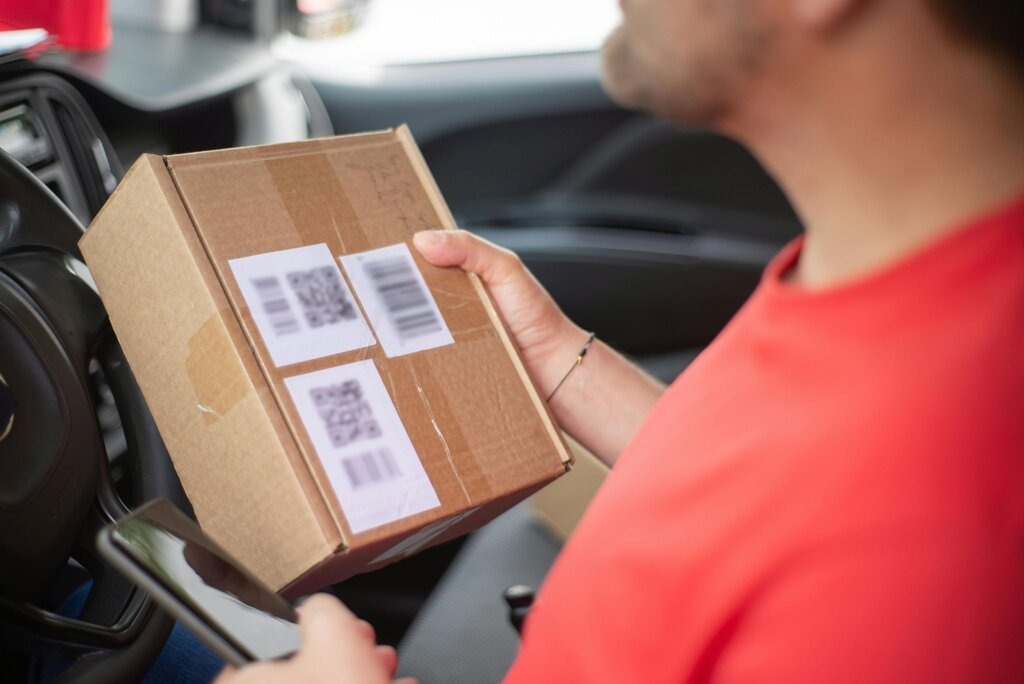
For more than 50 years, the familiar black-and-white barcode has identified products at checkout. According to GS1 sunrise guide by QRNow, it has been highly effective, but it was designed for a retail environment in which price lookup was the main priority. The barcode at the checkout has done one job well: identify a product so the retailer can retrieve its price. But retail now asks much more of packaging. Companies need to track batches, manage expiration dates, respond to recalls, verify products, and give shoppers access to information that cannot fit on a label.
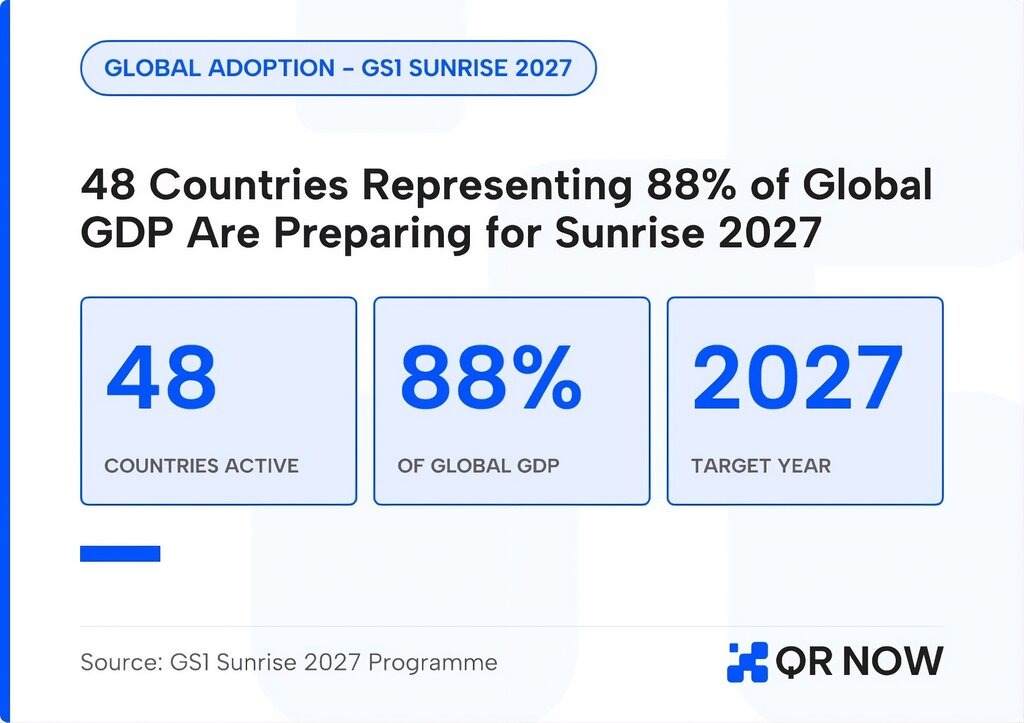
That is the idea behind GS1 Sunrise 2027. The goal is for retail point-of-sale systems to read both traditional one-dimensional barcodes and approved two-dimensional barcodes by the end of 2027. It is not a sudden ban on UPCs, nor does it mean every linear barcode will disappear. For a time, many products are likely to carry both formats.
Why 1D barcodes have limits
A standard UPC or EAN barcode usually contains a Global Trade Item Number, or GTIN. That number identifies the product type, but it does not normally distinguish one batch or individual item from another.
A 2D barcode, such as a QR Code powered by GS1 or a GS1 DataMatrix, can carry more information in a smaller space. Depending on how it is configured, it may include a GTIN, batch number, serial number, or expiration date. It can also connect the physical product to online information through GS1 Digital Link.
That matters when products from the same line have different histories. One batch may be nearing its use-by date. Another may be affected by a recall. A high-value item may need a unique serial number to support authentication.
More precise recalls and less waste
Traditional barcodes do not prevent companies from tracing products, but they provide limited detail at the point of scan. If batch information is not readily available, retailers may remove more stock than necessary during a recall.
When lot or batch data is encoded in a 2D barcode and captured by compatible systems, businesses can identify affected inventory more precisely. Expiration data can also support stock rotation, checkout alerts, and markdowns for food approaching the end of its shelf life.
The barcode does not manage these processes by itself. Retailers still need reliable data and systems that know what action to take.
The work required at checkout
Sunrise 2027 is often described as a packaging change, but much of the work will happen behind the scenes.
Retailers must check whether their scanners and software can read the relevant 2D formats and extract the GTIN correctly. Some may need software updates. Others may need camera-based scanners or new hardware.
Brands must choose the right barcode, decide what information should be encoded, maintain accurate product records, and test the printed symbol in real conditions. A code that is too small or poorly placed may still fail at checkout.
Packaging becomes a digital doorway
A GS1 QR Code using GS1 Digital Link can connect shoppers to ingredients, allergen details, recycling guidance, certifications, sourcing information, instructions, or warranty support.
A 2024 GS1 US consumer survey found that 79 percent of respondents were more likely to buy a product with a smartphone-scannable barcode or QR code that provided the additional information they wanted.
For brands, the advantage is flexibility. Linked web content can be revised without reprinting the code on every package. Instructions can be updated, a video added, or users redirected to another resource.
There is an important limit. Information encoded directly in the printed barcode cannot be changed. Only the linked content or its destination can be updated, and companies must maintain the digital infrastructure behind it.
What 2D barcodes can and cannot do
A 2D barcode can support supply-chain visibility, but it is not a complete tracking system. End-to-end traceability still depends on manufacturers, logistics providers, and retailers recording and sharing accurate information at each stage.
The same caution applies to authentication. A unique serial number can help verify an item, but a standard QR code is not automatically secure or counterfeit-proof. The database and verification process matter just as much as the printed symbol.
A global standard, not one universal label
GS1 standards give trading partners a common structure for identifying products and exchanging data. That can improve interoperability across markets, but it does not remove every national requirement.
A barcode may work technically in several countries, while the packaging still needs different languages, warnings, or regulatory information. Companies must continue checking local rules and retailer requirements.
There is also no universal mandate requiring every small business to replace its existing barcodes by a single date. Practical pressure will come from retailers, marketplaces, regulators, and trading partners as they adopt new systems.
More than a new symbol
Sunrise 2027 is best understood as a readiness target, not the overnight end of the UPC.
The immediate goal is to help checkout systems process both traditional and newer barcode formats. The wider opportunity is to connect product identification with more detailed information about batches, expiration dates, serial numbers, and digital content.
Companies that prepare well may improve recall management, inventory accuracy, customer information, and product support. But the benefits will require more than printing a square code on a label. They will depend on good data, suitable technology, and coordination among packaging, IT, supply-chain, compliance, and marketing teams.
The barcode is not disappearing. It is becoming a more useful entry point into the information that follows a product from production to purchase.